
Research at University Health Network
 
Technology Transfer
Menu Level 3
   
 
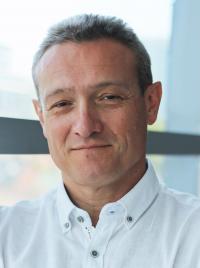
Igor Jurisica, PhD

Senior Scientist
Division of Signaling Biology
Ontario Cancer Institute (OCI)

Keywords: analysis, computational biology, high dimensional data integration, visualization and interpretation data mining, machine learning, gene and protein expression profiling, protein-protein interactions, high-throughput protein crystallization, artificial intelligence, molecular medicine 

Research Interests
The primary research focus is on integrative computational biology, and representation, analysis and visualization of high dimensional data generated by high-throughput biology experiments. Of particular interest is the use of comparative analysis in the mining of different dataset types such as protein-protein interaction, gene/protein expression profiling, and high-throughput screens for protein crystallization.

Intelligent molecular medicine
Technologies to measure gene and protein expression offer the opportunity to evaluate large sets of genes and proteins in parallel, and improve our understanding of tumorigenesis and patient treatment. However, molecular screening alone is not sufficient to achieve intelligent molecular medicine. Computational advances and computing power to analyze, manage and use genomic/proteomic information is required to turn data into knowledge for hypotheses generation for further research or to render them readily comprehensible for patient outcome prediction and treatment selection. To be used effectively, molecular profiling must be applied at the individual patient level to allow personalized information-based medicine. Our focus is on algorithm and tools development, their application and evaluation.

Many techniques for the analysis of genomic/proteomic data are available, yet none offers an integrated and comprehensive approach, by combining results from gene/protein expression data in the context of protein protein interactions (PPIs). We address this bottleneck in multiple cancers by systematic, unbiased analysis and visualization of data integrated from multiple high-throughput platforms under the hypothesis that such information will create insight not appreciable from the component parts.

The results of this research will help to fathom biological mechanisms of cancer, and will be applicable to improve disease classification, diagnostic measures, therapy planning, and treatment prognosis. Improving the treatment could in turn improve quality of life for cancer patients. Using the proposed tools and methodology, physicians will have more relevant information available at the time of diagnosis and treatment planning, and the patient will have a better explanation of the disease, its origin, progression path and treatment alternatives.

Structure-function relationship in protein interaction networks
It has been established that despite inherent noise present in protein-protein interaction (PPI) data sets, systematic analysis of resulting networks uncovers biologically relevant information, such as lethality, functional organization, hierarchical structure and network-building motifs. These results suggest that PPI networks have strong structure-function relationship. We are developing novel graph theory based algorithms for systematic analysis of PPI networks (both predicted and experimentally determined). We use this information to build predictive models and to integrate this information with gene/protein expression profiles.

High-throughput protein crystallization
One of the fundamental challenges in modern molecular biology is the elucidation and understanding of the rules by which proteins adopt their three-dimensional structure. Currently, the most powerful method for protein structure determination is single crystal X-ray diffraction, although new breakthroughs in NMR and in silico approaches are growing in their importance.

Conceptually, protein crystallization can be divided into two phases: search and optimization. Approximate crystallization conditions are identified during the search phase, while the optimization phase varies these conditions to ultimately yield high quality crystals. Robotic protein crystallization screening can speedup the search phase, and has a potential to increase process quality. However, this requires an automated process for evaluating experiment results. We focus on automated image classification, data mining of resulting information when integrated with protein properties, using the information for crystallization optimization planning and screen optimization.

Additional Appointments

  • Assistant Professor, Department of Computer Science, University of Toronto

  • Assistant Professor, Department of Medical Biophysics, University of Toronto

Pubmed Publications
Perform an automatic PubMed search of this researcher's publications.
 
 
Selected Publications
 
Related Webpages
 
  Igor Jurisica
Mailing Address
Primary Office
MaRS Centre
Toronto Medical Discovery Tower
9th floor Rm 9-305
101 College Street
Toronto, Ontario
Canada M5G 1L7

 
Email

Phone Numbers
416-581-7437(Primary)


Home Institutes Researchers Facilities Support Services Programs Commercialization Ethics News About UHN Ontario Cancer Institute Toronto General Research Institute Toronto Western Research Institute