|
|
|
|
| |
|
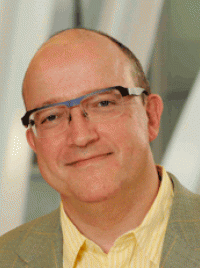
Michael Tymianski, BSc, FRCSC, PhD, MD
|
Senior Scientist Division of Fundamental Neurobiology Toronto Western Research Institute (TWRI) |
Keywords: stroke, ion channels, molecular biology, protein-protein interactions, neuroprotection, synaptic mechanisms, brain ischemia, traumatic brain injury, signaling mechanisms, anoxia, calcium homeostasis, protein chemistry, in-vitro toxicology, in-vivo stroke models
|
Cellular and Molecular Mechanisms of Neuronal Damage During Stroke and Other Injuries
Research in my lab is centered around the cellular and molecular mechanisms of neuronal damage during stroke and other injuries such as epilepsy and trauma.
Our focus is on calcium-regulated signaling pathways that cause neurons to die when injured. Our main contributions to this field has been the determination that acute damage to neurons is mediated by distinct signaling pathways that are specifically associated with certain types of cell membrane receptors and ion channels.
We are working on elucidating these pathways, with the goal of finding rate-limiting steps that might be amenable to modulation by pharmacological or genetic means. The ultimate goal therefore, is to design rational therapeutic strategies for neuronal injury based on a concrete understanding of the molecular mechanisms that cause it.
Current projects:
- We are working on mechanisms of coupling of Ca2+ influx through the NMDA subtype of glutamate receptors to intracellular second messengers that trigger neurotoxic signaling pathways. This project is centered around an understanding and modulation of the molecular organization of synapses, and the treatment of neuronal injury triggered by postsynaptic glutamate receptors.
- We are working on mechanisms of anoxic cell damage that are independent of postsynaptic glutamate receptors. Current projects involve the elucidation of Ca2+-dependent intracellular signaling pathways that result in cell death in the absence of excitotoxicity (glutamate-receptor-mediated damage).
- Using transgenic mice, we are working on the mechanisms of neurotoxicity triggered by non-NMD (AMPA-type) glutamate receptors in excitotoxicity.
The scope of each project includes studies in tissue culture and in-vivo models. Techniques most commonly used are neurophysiological, including Ca2+ imaging, confocal imaging, electrophysiology, molecular biology, and protein chemistry.
|
Pubmed Publications | | | |
| |
Related Webpages | | | |
|
|

|
Primary Office Toronto Western Hospital West Wing 4th Floor Rm. 435 399 Bathurst St. Toronto, Ontario Canada M5T 2S8 |
| |
|

|
|
| 416.603.5800 x5896 | (Primary) | | 416-603-5298 | (FAX) |
|
|
| |
|
| |
Terms
& Conditions | Privacy
Policy |
Copyright © 2000
University Health Network. All rights reserved.
Research at UHN: 7-504, 610 University Avenue, Toronto, ON Canada M5G 2M9 416.946.2000
|
|
|